
Over 200 years ago, on the ancient Isle of Skye and in the Scottish Highlands, the ancestors of today’s Cairn Terrier earned their keep routing vermin from the rock piles (called cairns) commonly found on Scottish farmland.
These early terriers were highly prized and bred for their working ability, not appearance. Such characteristics as courage, tenacity and intelligence, housed in a sturdy body clad in a weather-proof coat, armed with big teeth in strong jaws, were sought generation after generation. Gradually the breeds known as the Scottish Terrier and the West Highland White evolved and were named. The Cairn (the last to be formally named) remained the closest to the original small working terrier, bolting the fox, otter and weasel, sharing the meager fare of the crofter’s household.
Today the Cairn Terrier in America is a sensible, confident little dog, independent but friendly with everyone he meets. He may be found in an apartment, suburban home, or on a farm. Alert, intelligent and long-lived, the Cairn tends to remain active and playful well into his teen years, endearing him to children. True to his heritage, the breed still has very large teeth, large feet with thick pads and strong nails (the better to dig with!), strong, muscular shoulders and rears, and a fearless tenacity that will lead him into trouble if his owners are irresponsible. The Cairn Terrier Club of America is dedicated to preserving and promoting the welfare of the Cairn Terrier and wants to help you decide if a Cairn Terrier is the right dog to share your life.



Appearance
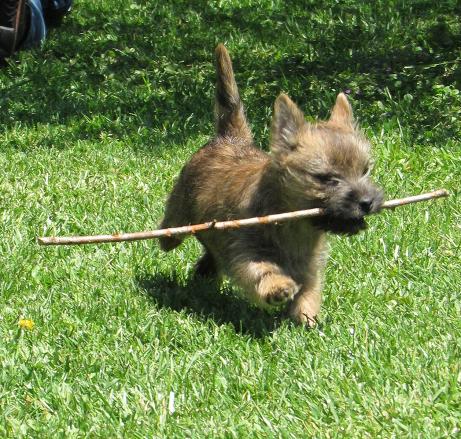
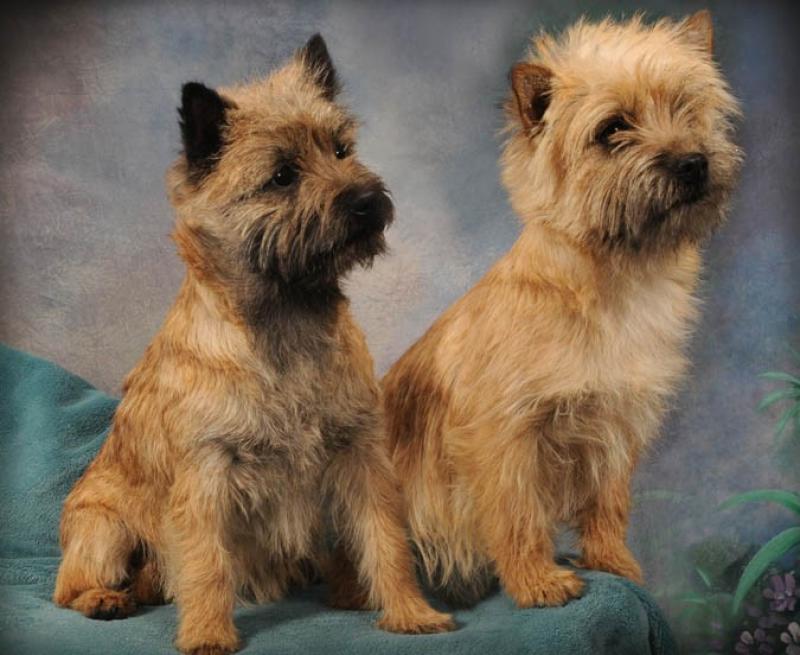
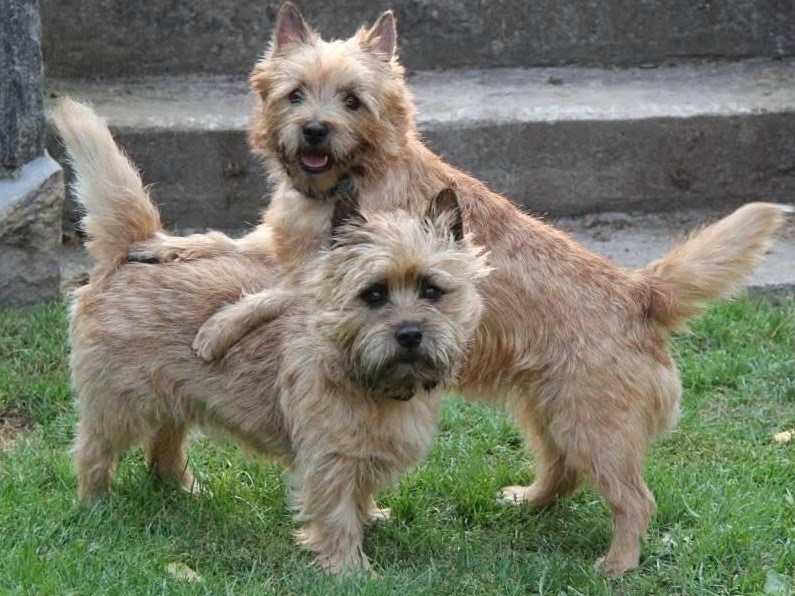
The immediate impression should be that of a small, shaggy, alert dog, head, tail and ears up, eyes shining with intelligence, poised and ready for anything.
The Cairn comes in a variety of colors except for white. All shades are attractive, and you will love your Cairn whatever color he turns out to be. It can be difficult if not impossible to predict adult color based on the puppy coat. Color changes in many Cairns continue for years, most brindles eventually becoming very dark, bordering on black. Some wheatens and reds also darken while others may remain light.
Standing 9-1/2 to 11 inches tall and weighing 15 to 18 pounds, the Cairn is truly a big dog in a small package. Cairn Terriers are small enough to carry easily and to fit comfortably on your lap, but tough enough to enjoy romping with children. Their sturdy appearance makes them especially appropriate as a man’s pet; no man who has ever owned one was embarrassed by his “little” dog.
Temperament & Training
Cairns seem to have an inborn affinity for children. They are physically very tough, and forgive or overlook mishaps and stepped-on feet with characteristic generosity of spirit. They should not, however, be teased or mistreated by children, and close supervision of small children and puppies is essential. Puppies need time away from even the best-behaved children and should be provided with a place where they can rest undisturbed until they are ready to play again.
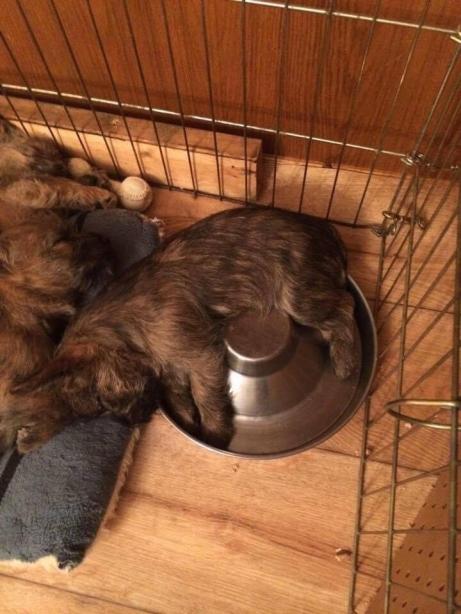
A “kennel” or crate is highly recommended. Used properly, a crate ensures the puppy’s safety and facilitates housetraining as well.
A Cairn thrives on attention and training, and suffers from lack of it. Without training, he will be bored and destructive, barking to help relieve the tedium. There is very little a Cairn cannot learn if his owner takes the time to teach him. Because Cairns are highly intelligent, training sessions should be fun and challenging, not overly repetitious.
A Cairn’s natural instinct is to chase small animals and they often challenge larger dogs. A leash can save your Cairn’s life. They don’t look both ways when crossing the street. Cairns should never be tied out in a yard or allowed to run loose. For safety, your Cairn should wear a collar with an ID tag when out and about. Ask your vet about micro-chipping. An ID tag or microchip is his ticket home.
They do love to dig, and flowerbeds are hard to resist; don’t tempt your puppy by leaving him alone in a manicured yard.
Puppies will teethe until about seven months of age. Give them lots of chew toys and chew treats. Do not give rawhide of any kind. If they start to chew on some furniture, wipe Listerine or Scope on it. Cairns hate medicinal smells and they will not go back to that. Be mindful of electrical cords and choking hazards. Puppies can quickly get themselves into trouble if unsupervised.
Training FAQs
I want to adopt a Cairn, but I have mobility issues that make it difficult to train my dog. How can I still train my Cairn?
There are dog trainers who can help train your Cairn, and many reputable breeders do some training of the dogs themselves. However, do consider that Cairns are very active dogs that enjoy training and exercise. If you are concerned about your ability to provide that exercise to your pet, consider discussing it with a person you live with or looking into a more sedentary dog breed.
Can I adopt a Cairn Terrier if I work 12 hour shifts and live alone?
Cairn Terriers are very intelligent dogs, and need regular attention. If you work a 12 hour shift and nobody else at your home is a part of raising your dog, you may need to consider another pet that needs less frequent attention. Your Cairn could become sad or destructive if left alone for such long periods.
Home & Environment
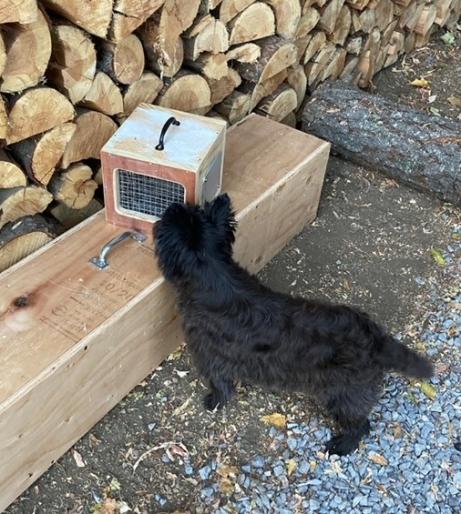
The safest arrangement is a securely fenced yard and supervision when he is in it. If there is no fenced yard, the Cairn should be exercised on a leash, as it is nearly impossible to train a Cairn to resist the urge to chase squirrels, cats, rabbits, other dogs, etc. Remember, Cairns were bred to hunt!
Walking is excellent exercise for Cairns and their owners. A brisk walk daily, on leash, is ideal. From the Cairn’s point of view, the longer the walk the better. Encourage your puppy’s natural ball playing talents, and you’ll have the perfect indoor exercise when the weather prohibits walking.
Cairn Terriers can made good city-dogs! They enjoy attention and affection, so living in an apartment without a fenced area to let your dog run loose can still work. However, make sure you take your Cairn on walks and provide proper training. An untrained Cairn Terrier alone in an apartment can cause destruction if he gets bored. Make time to play and train with your Cairn each day.
Home FAQs
Can I adopt a Cairn Terrier if I live in a city?
Yes, Cairn Terriers can made good city-dogs! They enjoy attention and affection, so living in an apartment without a fenced area to let your dog run loose can still work. However, make sure you take your Cairn on walks and provide proper training. An untrained Cairn Terrier alone in an apartment can cause destruction if he gets bored. Make time to play and train with your Cairn each day.
Health & Feeding Requirements
The Cairn Terrier is a basically healthy dog, and frequently lives 14 to 15 years or more. To contribute to his longevity and health a Cairn should be kept trim and active. His diet should consist of a premium brand of dry dog food or raw diet at your veterinarian's discretion. Most adult dogs maintain their weight on 1/2 to 2/3 cup of quality food a day. Keep fresh water always available. Treats should be kept to a maximum of 2-3 daily. Cairns easily become overweight, at least in part because they are so endearing as they beg for treats.
Initially, keep your puppy on the same food he has been eating. If you change foods, do so gradually.
Health FAQs
Can I share just a small bit of my food with my Cairn?
We know your Cairn is just the cutest little dog, but no matter how much they plead, do not feed your human food to your Cairn. Cairn Terriers are prone to becoming overweight, and human food tends to be unhealthy for them. Consider training your Cairn Terrier on tasty dog treats that they will love. You can also add small amounts of raw meat, chopped raw or lightly steamed vegetables, yogurt and cooked egg.
Grooming
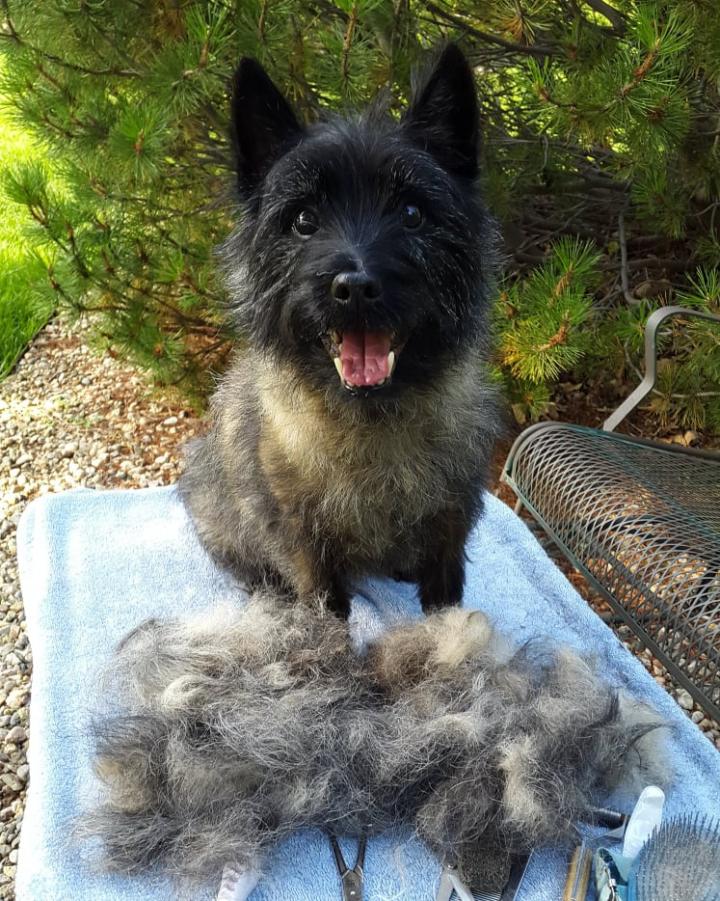
Maintaining the Cairn’s shaggy appearance is not difficult. An hour or so of grooming each week will keep his coat in good condition. Trim excess hair from tips of ears, tail and feet. Keep nails short and teeth clean.
Shedding is minimal if the dog is thoroughly brushed and combed weekly. Preparation for the show ring is comparatively simple, also. It is important to keep a Cairn free of fleas, as many Cairns are allergic to flea bites.
Cairns do not need frequent bathing; this will soften the coat and attract dirt. Their stiff outer coat keeps your Cairn clean and dry. You may only need to wash up belly and legs, using a harsh coat shampoo designated for terriers.
Selecting a Breeder
Once you have decided you want a Cairn you will need to locate a breeder. A properly reared and socialized puppy from a conscientious breeder will be worth the effort you will need to find him. The Cairn Terrier Club of America will provide you with a list of member breeders in your area. The breeders on the list will be concerned, caring individuals who want to know as much about you as you want to know about their puppies.
When you choose a puppy from a responsible breeder, you will have someone to call on for advice and assistance in all aspects of puppy care and rearing. A good breeder’s commitment to his or her puppies is lifelong, and he or she will welcome your questions, now and for the life of your Cairn.
Breeder FAQs
What signs do I look for in a trustworthy breeder?
A good breeder will generally meet the below standards:
- The puppies show good behavior and socialization
- The puppies are trained once they are old enough
- Health testing is a priority for the breeder
While the CTCA does not endorse any breeders on our website or in lists of suggested local breeders, we try to only recommend reputable breeders. If there are ever reports of improper practices by a breeder, they may be removed from our suggested breeder lists.
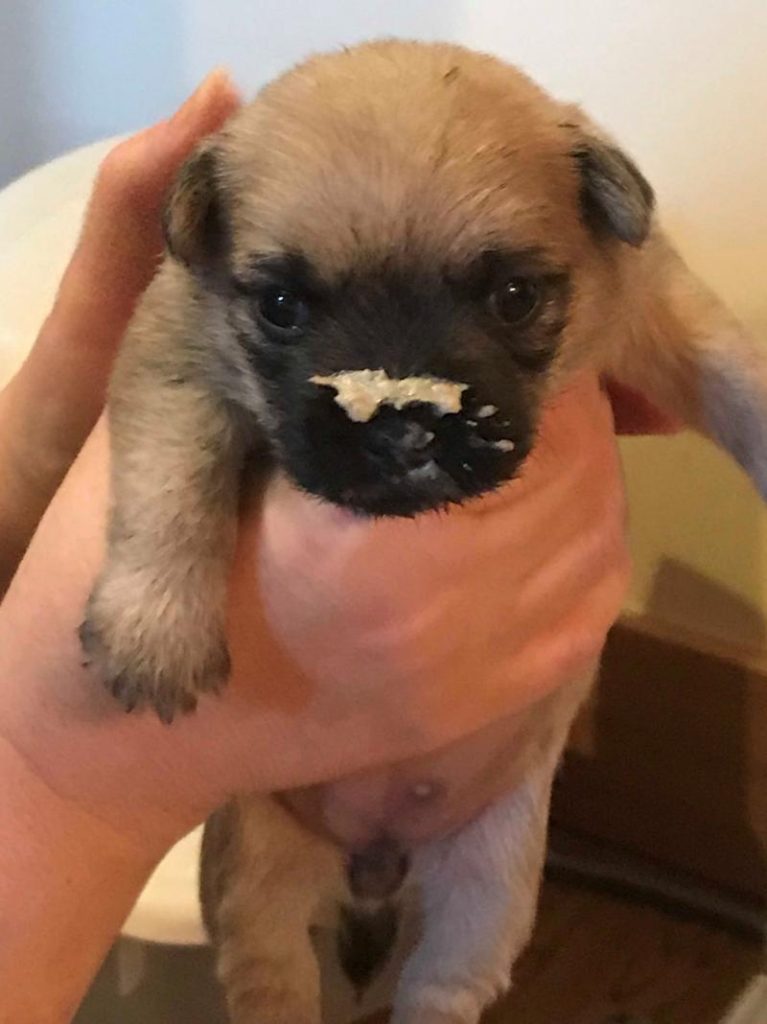
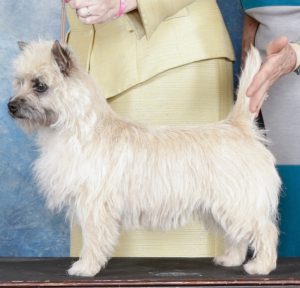
Pet or Show?
One of the questions you will be asked by a reputable breeder is whether you wish to show or breed your puppy. A young puppy can have “show potential” but cannot be guaranteed show quality. If you will be unhappy if the puppy does not turn out to be a successful show dog, you should consider an older puppy. Between the ages of 6 and 12 months a breeder can determine if a puppy will measure up to the Standard.
Many of the qualities which breeders select in their efforts to produce show dogs are also essential for pets. A Cairn bred for the show ring will be healthy, friendly, stable in temperament, alert and intelligent. The “pet” puppy whose parents are show dogs has an excellent chance of having his parent’s quality. He may fall short in some small way from being competitive in the ring, but the chances are you would not even know what the fault was if you did not ask. This pet puppy has the same parents, the same prenatal care, the same environment and the same socialization as the one the breeder will later take into the ring. He will be a dog others will admire and one that you can take pride in owning.
Show FAQs
Can I submit my Cairn for competition?
Cairn Terriers make good dogs for shows and competitions! Different events have different entry requirements, so make sure to review the breed standards and rules for the competitions you are looking at. There are some specific requirements, such as Cairn Terriers cannot be spayed or neutered for conformation shows, that you should research early. Cairns love training and participating in a wide range of activities, so choose a competition that works for you and your Cairn.
Male or Female?
Actually, both make equally satisfactory pets. A neutered male does not “mark” inside or out if he is neutered at the appropriate age, nor does he exhibit other undesirable characteristics many associate with male dogs. Many Cairn breeders feel the male is more affectionate. The females tend to be a bit more independent. Most breeders will expect you to spay or neuter your pet Cairn, both as a preventive health procedure and to prevent future breeding.

Which Puppy?
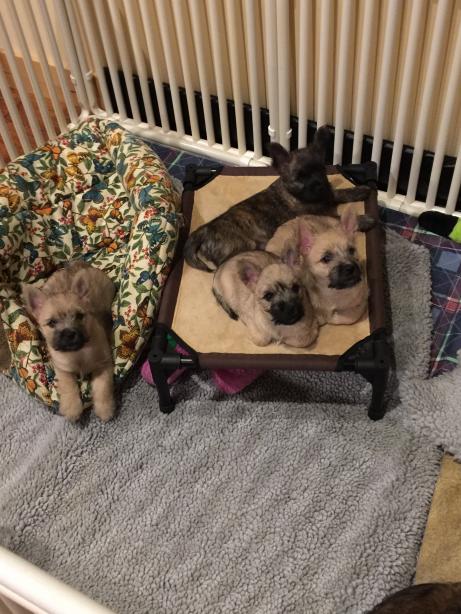
When you find a breeder you respect, spend time discussing your family and your lifestyle. The breeder has spent weeks or months with the puppies and knows their personality and temperament. The reputable breeder wants you to have the puppy that best suits you, and with which you will be happy.
Most breeders do not sell puppies younger than 10 weeks of age, and many will not sell a puppy under 12 weeks, or even older, depending on the new owner’s living arrangements and lifestyle. If your breeder suggests that an older puppy or even a young adult would be better for you, keep an open mind and consider the possibility.
Breeders sometimes have puppies that are older, such as six, eight, or ten months. These have often been reserved by the breeder as potential show prospects. These older puppies will be housetrained much sooner than a very young puppy. If they have been socialized, they may be the ideal choice for a working family. In some circumstances an adult dog, possibly already housetrained, may be available. Cairns are very adaptable to new circumstances and quickly make themselves part of their new family, enabling those who could not raise a puppy to have the company of a Cairn. Breeders may also have older dogs, 3 to 5 years, that have been shown but will may not be kept for breeding. Selecting a “retired” Champion usually means your potential pet has been trained, socialized, and has full health screening.
The Cairn Terrier Club of America hopes that this information will help you make an informed choice as you select a dog for your family. If your choice is a Cairn Terrier, we welcome you to the wonderful world of Cairns, a fellowship that unites Cairn lovers everywhere. Chances are that your first Cairn Terrier will not be your last. Cairn owners become loyal fanciers and seldom want another breed once they’ve owned a Cairn. Many say the only thing better than owning a Cairn is owning two!